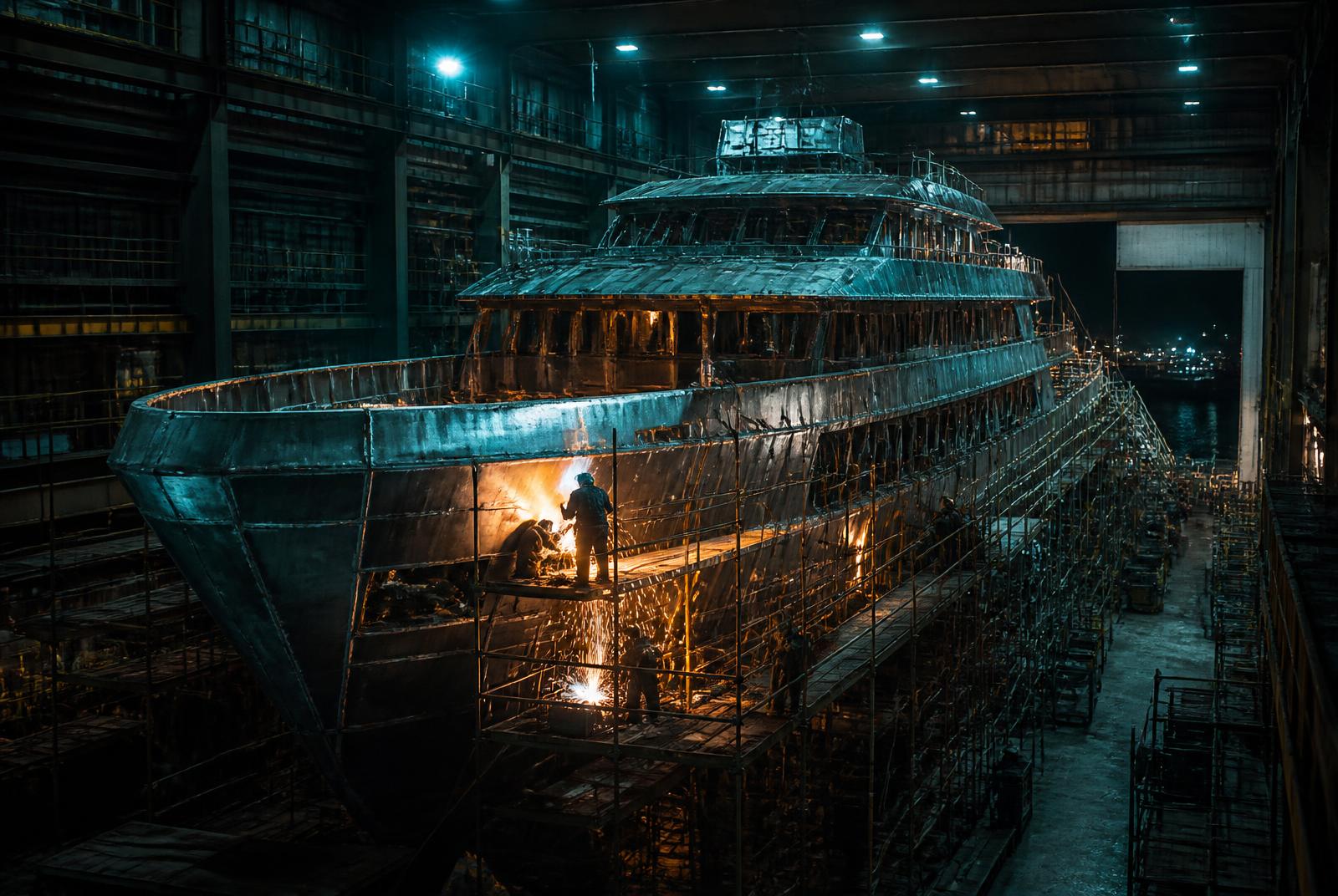
Efficiency starts with the hull
The largest single influence on a yacht's fuel consumption is resistance. Hull form optimisation, realistic weight control and an operating profile agreed at the design stage deliver reductions that no propulsion package can match afterwards.
Choosing a displacement platform for long, slow passages — rather than a fast planing hull used at low speed — is often the most consequential environmental decision in the whole project.
Hybrid systems where they genuinely help
Diesel-electric and hybrid arrangements reduce running hours at low load, allow quiet anchoring on batteries and can simplify machinery layout. They add weight, cost and complexity, so they are justified by the intended operating pattern rather than by principle.
Heat recovery, variable-speed pumps, LED lighting and better insulation are less visible but reliably effective.
Materials, waste and long life
Steel and aluminium are recyclable and repairable, which matters over a fifty-year service life. Responsible timber sourcing, low-emission coatings and reduced offcut waste in cutting plans are practical steps available to any yard today.
The most sustainable yacht is usually the one that is refitted rather than replaced — which places refit capability at the centre of the discussion rather than its margin.
Custom Superyacht Building in Turkey · Selected Series and Projects